1. Business Overview
A quieter way to serve Cape Cod.
EPAC is a recycling and local waste company who uses all electric garbage trucks to serve the communities in Cape Cod. We will start with scheduled residential collection and hopefully expand carefully into vacation rentals, neighborhood associations, seasonal homes, and small businesses. Customers will receive notification reminders before every pickup day, receive sturdy wheeled carts, and have a simple system to request extra collection or report a missed pickup.
The idea came from my experience living in Cape Cod. I kept hearing loud diesel garbage trucks picking up waste early in the morning, waking everyone up. The noise is louder in a narrow residential street during busy summer days, when year-round residents and visitors share the neighborhoods. I thought of many ways I could provide a service in a more quieter and cleaner way. A practical answer was an all-electric truck because the motor is way quieter in low speeds and not releasing exhaust from the tailpipe while driving through the beautiful neighborhoods in Cape Cod.
The purpose of the EPAC company is to make trash collecting fit the character of Cape Cod. EPAC was designed for a near silent operation. Its electric drivetrain removes the diesel engine rumble, while the lifting equipment, sound insulation, smooth motion controls, and the cushioned contact points reduce the noises created during the collection. Customers may hear a brief safety alert or the movement of the cart and its trash, but the truck is built to move and work quietly without disturbing the neighborhood.
We give customers a driven local option with respectful drivers, clear schedules, and an amazing service designed around all of Cape Cod’s year-round needs.
Listen to the difference
The closest current model. EPAC goes quieter.
This real-world clip shows a fully electric refuse truck collecting a cart. It removes diesel rumble while showing where quieter lifting, insulation, and smooth-motion controls can improve the experience.
Electric, but still audible.
The motor is quiet, but the lift, cart, and collection equipment can still be heard. This reference truck is not an EPAC vehicle.
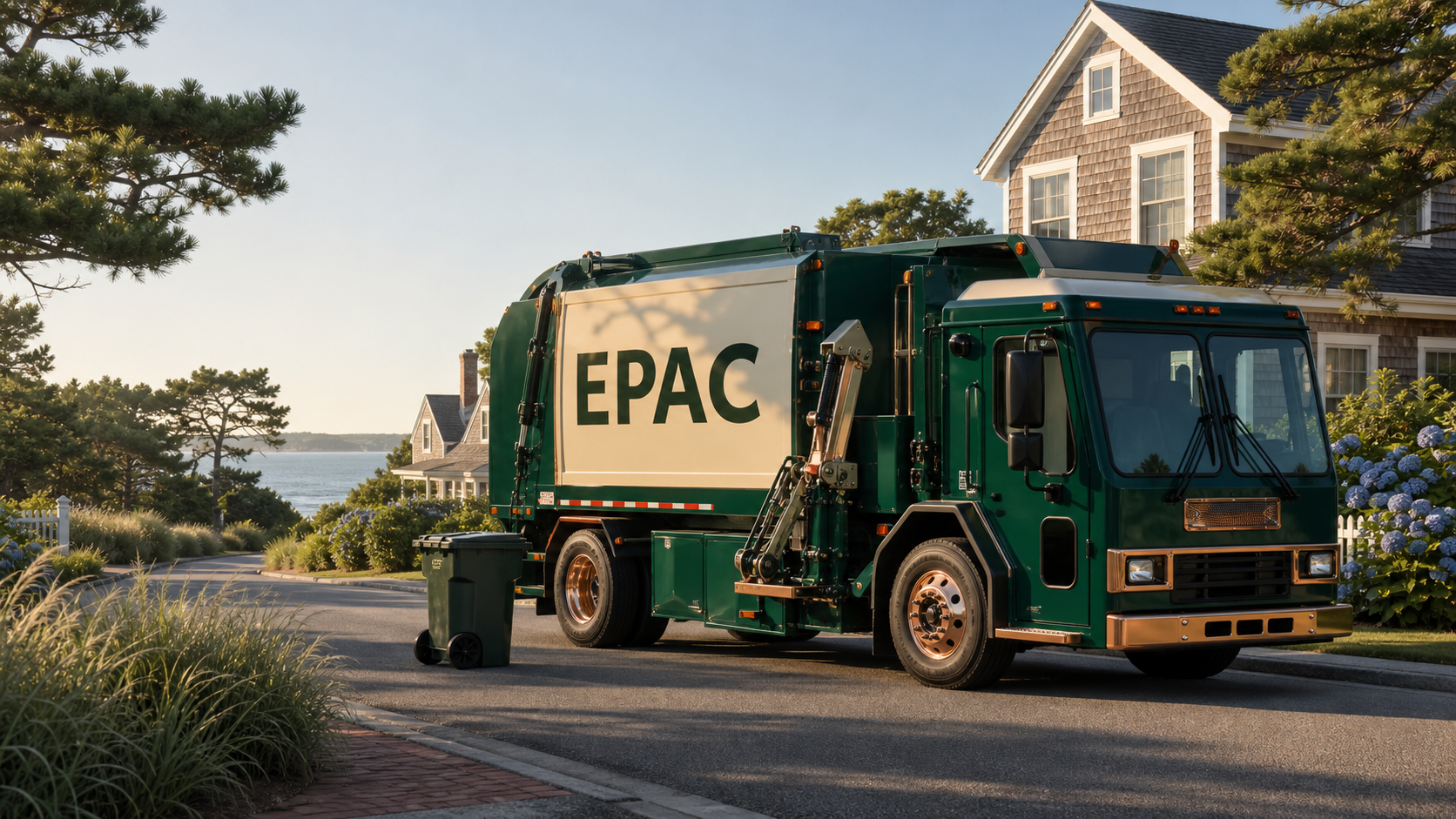
Near-silent by design.
EPAC combines electric drive with sound insulation, cushioned contact points, and smooth-motion controls to reduce collection noise.
2. Mission Statement
“We provide a reliable, low noise recycling and waste collection through an all-electric truck built for all of Cape Cod! We make your everyday cleaner, calmer, and easier to deal with, while protecting the place we all love.”
Vision Statement
“EPAC views Cape Cod becoming one of the leading places in the country for modernizing neighborhood services while still keeping the Cape Cod vibe. In a few years, residents and businesses across Cape Cod will have access to all-electric collection that supports quieter mornings, cleaner air, and responsible growth.”
3. Target Market
Made for the people who live and work on the Cape.
The main customers that EPAC would target are year-round residents ages 30 to 75 who expect dependable service, clean communities, and simple billing. While many prioritize environmental responsibility, convenience and reliability remain important. We will also serve managers and owners of vacation rentals, condominium associations, second homes, and local businesses that need pickup during seasonal demand.
Service territory
All 15 towns of Barnstable County
In the beginning we will primarily focus on nearby routes so our fleet can work efficiently. Expansion to other towns will happen only if customer demand is high enough to support a full route.
4. Products or Services
Flexible plans for homes and businesses.
EPAC will sell subscription-based trash and recycling pickup. The service will include a wheeled cart provided by us, weekly curbside collection, access to customer support, and digital schedule reminders. Customers can add bulky pickups, special move-out service, extra bags, or an additional cart for an additional fee.
We offer quiet equipment, customer service, and local knowledge. A larger company may serve many regions; however, EPAC has the knowledge to design routes around Cape traffic, seasonal population changes, narrow streets, and town disposal rules. Our routes will reduce unnecessary driving, while weekly maintenance and driver training will make the streets safer and collection more consistent. Our company name will be displayed simply on every vehicle so customers instantly know what the business stands for.
EPAC will be honest about the word “quiet.” The electric drivetrain removes loud diesel engine rumble and idling noise; however, safe collection cannot be completely silent. Backup warnings, the electric or hydraulic lifting system, and the movement of glass, metal, and trash may still be heard. The service is designed to be quieter, not noiseless.
5. Marketing Plan
Build trust locally.
Marketing will start locally and focus on building residents’ trust. Our goal is to show residents what we offer and explain the benefit of a quiet truck. We will use real route information and customer experiences, not exaggerated claims.
Social Media
We will post photos and short videos on Facebook, Instagram, and TikTok introducing our drivers, trucks, and pickup process. Posts will contain route openings, recycling tips, seasonal reminders, and behind-the-scenes maintenance.
Online Advertising
Social and search ads will target adults in towns where routes are available. A clean website will show prices, service rules, frequently asked questions, and a signup form.
Word-of-Mouth Referrals
Existing customers who refer friends and neighbors will receive a bill credit after the new customer completes the first month. Neighborhoods will be encouraged to join because dense routes save time and energy.
Local Events and Flyers
Flyers and door hangers will be placed where permitted. We will attend town events, neighborhood meetings, and local business gatherings with a truck demonstration if permitted.
Partnerships
Relationships with property managers, real estate managers, homeowner associations, and chambers of commerce will help reach people interested in property services.
Performance
In the first year, performance will be measured by customer acquisition cost, referral rates, and customers located close to an existing route. Customers near one another are more profitable and efficient than the same amount spread across Cape Cod.
6. Operations
Online convenience with local, in-person service.
EPAC will operate both in person and online. Customers can sign up, select a plan, pay bills, receive reminders, and request extra pickups through the phone or website. Work will be completed from a leased yard with secure parking, a charging connection, safety supplies, cart storage, and room for inspections. We will not need a storefront because customers receive service at their property.
At the start, EPAC will operate with one electric truck and build routes in a limited area. The truck will charge overnight. Before any route, the driver will complete safety checks covering tires, lights, cameras, battery charge, lifting equipment, and emergency supplies. Route software will organize stops to reduce backtracking. After collection, waste and recycling will be delivered to approved transfer or processing facilities, and the truck will return for cleaning and charging.
People and Responsibilities
The owner will manage customer service, schedules, partnerships, and billing. A properly licensed commercial driver will operate the truck and perform daily inspections. During busy periods, a helper will assist where the equipment and safety plan require it. An accountant will help with payroll and taxes, while a qualified technician or vehicle manufacturer will handle specialized truck repairs and high voltage. As routes grow, driving positions and customer support will be added.
Main Resources and Equipment
- One electric refuse truck with a cart-lifting system, warning equipment, safety cameras, and a service agreement
- Charging equipment, electrical installation, and a backup charging plan
- Trash and recycling carts, replacement wheels and lids, protective clothing, cones, hand tools, and spill-control supplies
- Billing, customer-management, and route-planning software, plus a phone and tablet for the driver
- General liability, workers’ compensation, property, and commercial-vehicle insurance
Service Schedule and Quality Control
Collection days will normally be Monday through Friday. Routes will avoid unnecessary late or early arrivals, and customers will receive notice when storms, holidays, or road closures change the schedule. If the primary truck cannot complete a route, EPAC will use a backup or schedule the earliest possible recovery pickup. This backup plan is important because having one truck creates a risk during the startup period.
Quality will be tracked through on-time completion, customer complaints, missed pickups, electricity use, safety events, and route time. Drivers will document unsafe materials, blocked carts, and contamination with a photo when appropriate. Customers will receive a simple explanation of why an item was left behind. Monthly reviews will identify streets or neighborhoods that require customer education or schedule changes.
Growth Plan and Operating Risks
Our mission is not to cover all of Cape Cod as fast as possible. It is to learn from actual operating data by filling one dependable route. If route profitability and customer retention meet targets, EPAC will add a second truck or service area. The biggest risks are winter weather, the high purchase price, charging interruptions, disposal-fee changes, summer traffic, and slower customer growth than expected. We will reduce these risks through realistic cash reserves, preventive maintenance, careful route density, and transparent communication.
7. Financial Overview
A one-truck launch built to grow.
The estimated startup cost for the entire process is $583,000. The electric truck is the biggest expense, so the final plan would compare purchasing, grants, and leasing before any commitment is made.
Expected Funding
The expected funding mix is around $58,000 in personal funding and $525,000 from a commercial equipment loan, clean-transport grant, truck lease, or local investor. Using more than one source can reduce the cash required. Before launch, the owner would confirm loan payments, insurance, interest, warranty coverage, and grant conditions. Working capital will be kept separate from vehicle down payments so bills can be paid during the customer-building period.
Startup Cost Estimate
Electric refuse truck with initial equipment$450,000
Charging equipment and installation$55,000
Carts, replacement parts, safety gear, and tools$24,000
Yard deposit and initial setup fee$15,000
Licenses, permits, and insurance deposits$21,000
Website, software, branding, and launch marketing$8,000
Opening working-capital reserve$10,000
Total Estimated Startup Cost$583,000
How the Business Will Generate Revenue
Most revenue will come from monthly subscriptions, making income easier to manage than one-time sales.
650 residential accounts × $55 × 12 months$429,000
45 business accounts × $190 × 12 months$102,600
Seasonal and extra services$57,000
Estimated First-Year Revenue$588,600
8. Conclusion
EPAC solves a familiar problem.
EPAC has the potential to succeed because it is solving familiar problems with a service that people need. The business does not depend only on the environmental appeal of an electric truck. It has a strong promise of dependable local collection, less engine noise, no tailpipe exhaust on routes, plans that fit year-round and seasonal customers, and clear communication.
The idea also comes with realistic challenges. The truck is expensive, a one-truck launch requires a backup plan, and success depends on building dense routes rather than having customers too far apart. Starting in a targeted area, maintaining cash reserves, measuring results, and expanding only when we can support it will help EPAC grow responsibly.